
Azitec M3000 IsaMill™ Disc Wear Rates
Azitec’s M3000 IsaMill™ disc upgrade demonstrates a significant improvement in ultra-fine grinding performance, delivering approximately 30% greater grinding efficiency while maintaining throughput and disc usage at historical levels.
- Date: 2025
- Client: Confidential
- Type: Gold Processing
About this Project
Challenge
The site required improved ultra-fine grinding performance from an established UFG mill, while managing disc usage and reducing wear across critical internal components.
Solution
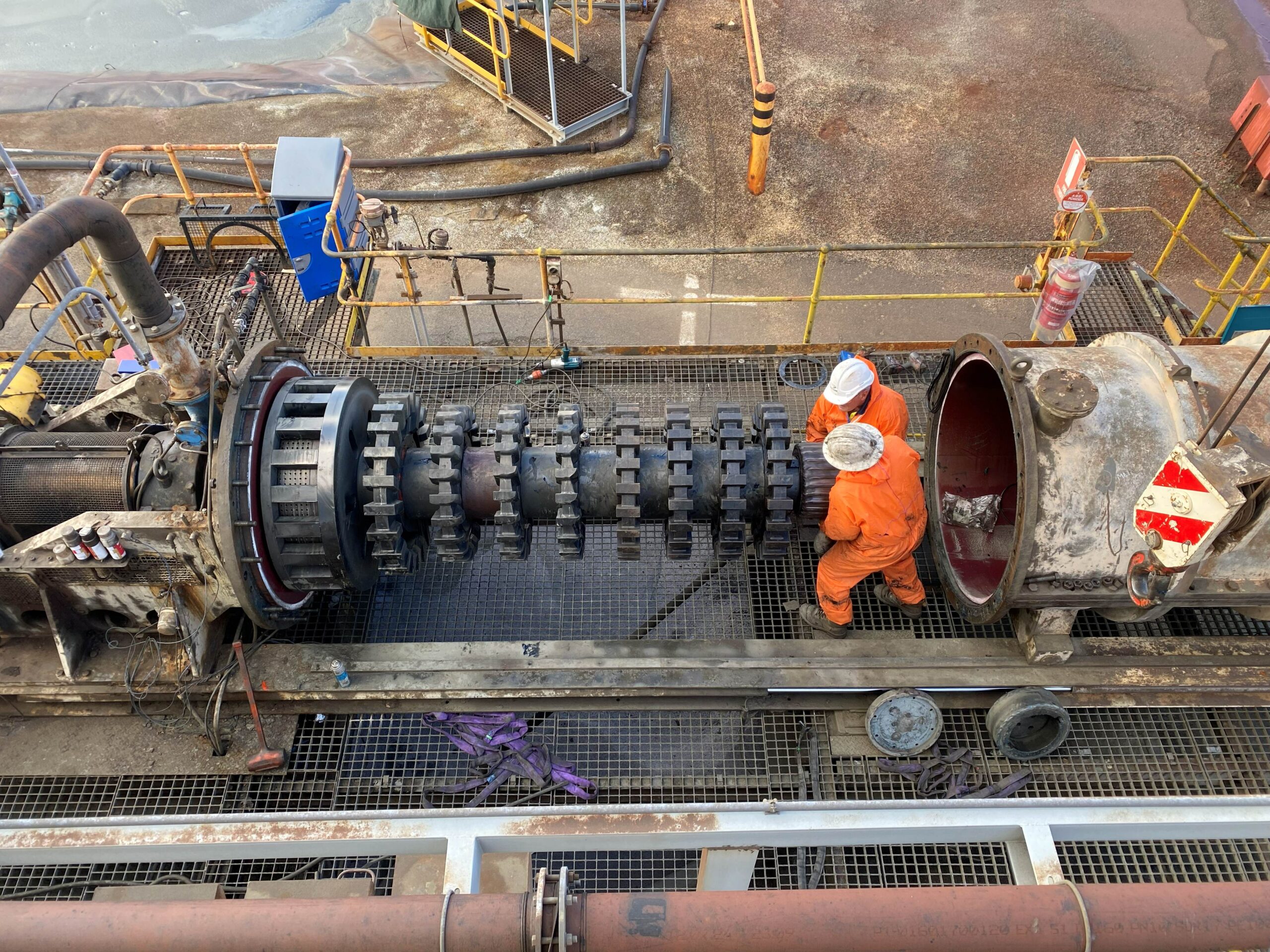
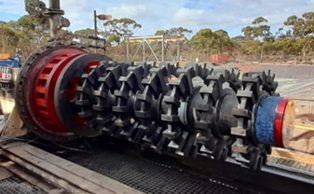
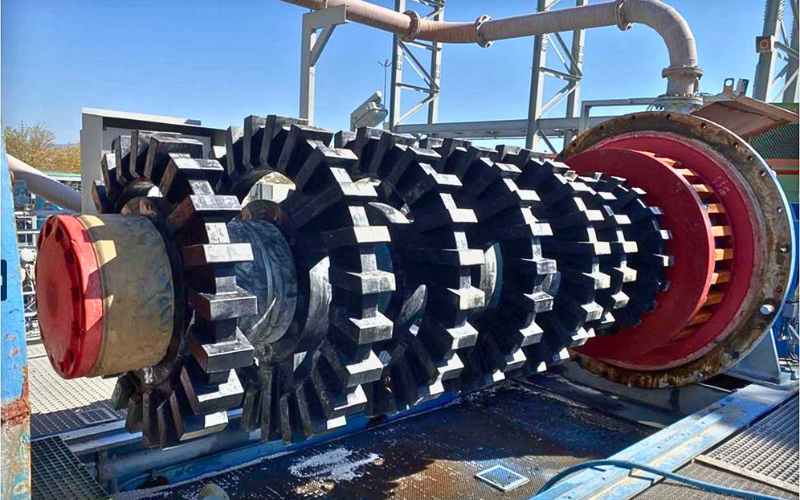
Azitec progressively refined the disc configuration to shift grinding intensity toward the feed-end of the mill, supported by DEM-SPH modelling, Oscillot vibration sensing and multiple design iterations. This included the adoption of an 8-disc 7+1 arrangement and polyurethane feed-end components to improve classifier protection, media retention and wear performance.
Outcome
The upgrade achieved sustained sub-9µm grind performance, approximately 30% improved grinding efficiency, stable throughput at around 11t/h, and overall disc consumption aligned with historical levels. Non-disc component wear life also improved significantly, with classifier wear rate reduced by more than 10×.
Key Metrics
- 30% increase in grinding efficiency
- Sub-9µm grind achieved, approximately 8.7µm P80
- Now operating at 1,000kW versus historical 890kW
- Throughput maintained at approximately 11 t/h
- Disc consumption maintained at 32–33 discs per year
- Internal component wear improved close to 10×
- Classifier service life increased close to 1300%
Related Projects
Grinding Efficiency Across Mineral Types
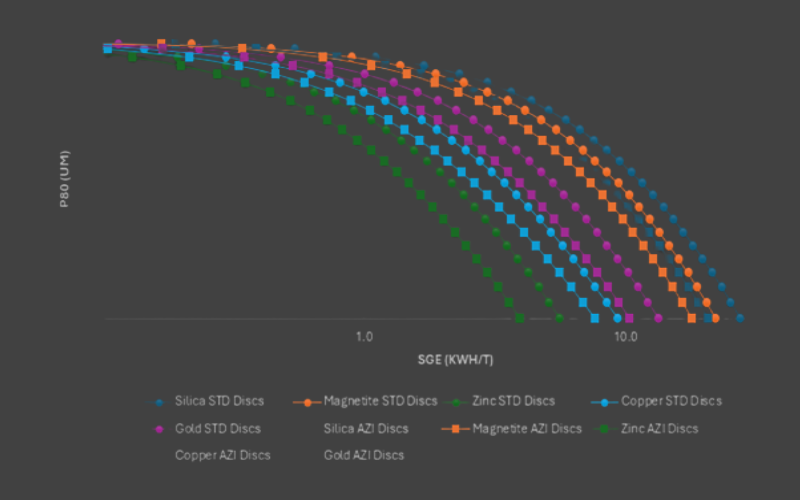
Controlled IsaMill™ M4 testing showed Azitec discs delivered an average 20.8% efficiency advantage across silica, magnetite, zinc, copper and gold samples.
IsaMill™ Monitoring During Disc Upgrades
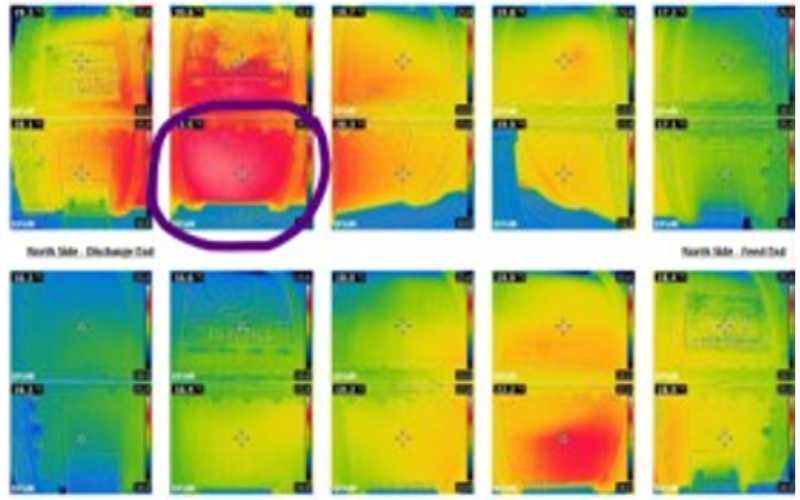
Azitec combines thermal imaging with 24/7 Oscillot vibration sensing to identify abnormal mill behaviour and support faster, more informed operational response.
M10,000 IsaMill™ Rotor Wear Optimisation
Azitec used inspection data and DEM-SPH modelling to identify localised rotor wear mechanisms and recommend a revised disc arrangement pathway.